A research-backed review
Kava for Socializing: Can It Help You Enjoy a Night Out Without Alcohol?
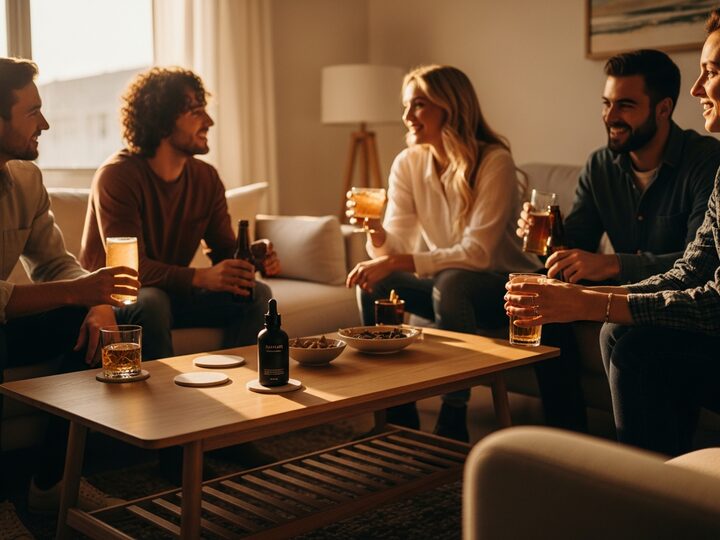
Conversation, company and a slower pace can matter as much as feeling more outgoing.



Commercial disclosure: this guide is written by Nukava’s founders. Nukava sells kava. This is education, not medical advice; the research discussed does not establish that Nukava products treat these conditions.
Can Kava Help You Feel More Comfortable in Company?
For some people, yes. Kava can suit a relaxed gathering, offering a shared ritual and sometimes a feeling of greater ease or talkativeness. Other people become quiet, inward-looking or sleepy. Its strongest fit is an unhurried social occasion that welcomes those differences. That is separate from claiming it treats social anxiety or improves performance in every setting.
In this guide · Jump to a section
How Kava Fits a Social Occasion
Social Comfort Versus Being More Outgoing
A successful gathering may mean talking freely, listening comfortably or simply feeling at ease alongside friends. Those are all legitimate goals. Kava need not turn someone into a different personality to fit the occasion. Equally, being happy to sit quietly may be a poor match for dancing, networking or another activity requiring sustained energy.
The Communal Role of Kava
Pacific kava practices include different forms of hospitality, relationship-building and cultural participation. Interviews with Tongan-born men in Auckland place the beverage within that social world. It would miss much of the point to reduce a shared occasion to a chemical effect, or to assume every community follows the same customs.
Relaxation, Setting and Conversational Ease
Subjective relaxation could make company feel more comfortable, while the gathering itself creates permission to slow down and talk. A contemporary user survey records friendliness and relaxation, but cannot separate pharmacology from expectation and setting. The experience is plausible; a proven mechanism for becoming more sociable is a stronger claim.
Research on Kava and Social Connection
Social and qualitative studies are especially relevant here because the setting is part of the use case.
| Source | Evidence | Design | What it found | What to keep in mind |
|---|---|---|---|---|
| Nosa and Ofanoa, 2009 | SupportsClaim: Kava can make a relaxed social occasion more comfortable or enjoyable for adults. Participants described connection within community beverage use. This supports perceived social value, with tiredness and setting limiting generalization. | Interviews with 12 men | Connection and tiredness featured in accounts of use. | The drink’s contribution cannot be isolated from the gathering. |
| Fehoko: faikava and cultural identity | SupportsClaim: Kava can make a relaxed social occasion more comfortable or enjoyable for adults. Participants valued cultural and creative learning through faikava. This supports a meaningful shared occasion, not a universal or isolated beverage effect. | Qualitative work with 12 men | Participants valued cultural and creative learning. | Specific community experiences, not a universal social outcome. |
| Ofanoa and colleagues, 2020 | NeutralClaim: Kava can make a relaxed social occasion more comfortable or enjoyable for adults. The interviews describe social value alongside costs. The retained mixed findings do not establish that the overall occasion was consistently improved. | Group interviews with 104 men | Participants described social value alongside costs. | Convenience sample; not a controlled comparison. |
| US kava-use survey, 2026 | SupportsClaim: Kava can make a relaxed social occasion more comfortable or enjoyable for adults. Reported friendliness and relaxation match the social-comfort claim. The opt-in survey cannot determine causation or the likelihood of benefit. | Survey of 2,000 respondents | Friendliness and relaxation were reported. | Attribution and selection limit causal conclusions. |
Sources accessed October 12, 2026. This is a focused review of the linked sources, not an exhaustive search of every kava study.
What Social Kava Research Shows
Shared Social Value Versus Personality Change
The interview study and faikava research are useful because they ask what people find meaningful about participating. Belonging and conversation cannot be fully captured by a claim that a substance makes everyone outgoing. They also depend on who is present, how newcomers are welcomed and what the gathering is for. Those findings support taking the occasion seriously. They do not show that serving kava at any event will create the same relationships, or that a quiet participant has failed to get the intended effect. Comfortable company is already a worthwhile outcome.
Matching Kava to Conversation, Dancing or Quiet Company
The club interviews include costs as well as social value. That is important when translating the idea to a contemporary gathering. A slow conversation and an activity demanding coordination are different tests of usefulness. Personal accounts describe both easier interaction and a turn toward quietness or physical slowing. The practical conclusion is to leave space for those differences rather than making a social promise on behalf of everyone present. Kava can be optional, and the company should remain the center of the gathering. This also avoids confusing ordinary social ease with treatment of persistent, distressing social anxiety.
Personal Experiences Socializing With Kava
The accounts span easy conversation, quiet company, a shared gathering and an unsuccessful fit for dancing. Enjoying a social occasion does not always mean becoming more talkative.
Comfortable talking—or comfortable being quiet
One commenter often felt less uptight and more conversational while unwinding. On other occasions, quiet company was more appealing than talking, and some laziness felt acceptable at the end of the day. Their desired outcome was comfort around people, which did not always mean becoming more talkative.
Read the original account →A pleasant alternative to alcohol in company
Although kava did not suit this commenter for work, they preferred it to alcohol in social settings. A social preference, not a measure of conversation quality or reduced clinical anxiety.
Read the original account →A shared evening of music and conversation
The writer described group conversation, music and snacks with kava after previously meeting over beer. The forum profile labels the contributor a kava vendor. This commercially affiliated firsthand description is not an independently verified customer review.
Read the original account →A twenty-day experiment after established sobriety
After earlier unimpressive experiences, the writer tried Fiji Vanua Instant Gold nightly for about twenty days and described easier relaxation and less social anxiety. They were already nearly two years alcohol-free before this experiment. Alcohol and benzodiazepine abstinence were already established. This short account describes perceived social ease within a nightly routine, not a demonstrated treatment effect or a story of kava producing sobriety.
Read the original account →The effect did not suit dancing
After a month of trying kava for blues-dance gatherings, another writer had not found a good fit. Kelai eased inhibition but could affect coordination and vision; other products felt overstimulating or inward-looking. The intended occasion was specific, and a successful dance-night outcome was not reported.
Read the original account →Pleasant, without the expected social boost
A writer shared Aluball-prepared Tonga kava with a friend after several disappointing experiences with other preparations. The evening eventually brought pleasant sedation, but not the expected increase in sociability. The shared batch and changing products make the effect difficult to attribute to a single factor.
Read the original account →Other Ways to Plan a Welcoming Gathering
A good social setting can be built around several kinds of shared occasion.
| Approach | Evidence & role | Practical tradeoffs |
|---|---|---|
| A gathering with ordinary alcohol-free drinks | Supports conversation while leaving psychoactive effects out of the plan. Source | Works best when hosts put equal care into the drink and the welcome. |
| A kava gathering | Adds a shared beverage and possible relaxing experience. Source | Guests may respond differently; optional participation and clear ingredients matter. |
| A culturally hosted ceremony | Offers a community-defined form of participation. Source | Ask hosts about their own protocols rather than reproducing a generic internet ceremony. |
When Kava Fits a Social Evening
Kava has a credible place in relaxed social life. The most useful expectation is a shared occasion that may feel easier or slower, not guaranteed confidence or extroversion. When the activity and the response fit, the drink can be part of the appeal; the welcome and the company still do essential work.
Kava for Socializing: Common Questions
Open a question for the longer answer.
Does kava make people more talkative?
Possibly, but some people instead prefer quiet company or feel sleepy. Talkativeness is only one possible social response.
Is social ease with kava the same as treating social anxiety?
No. Feeling comfortable at a particular gathering is different from a sustained improvement in a social-anxiety disorder.
Does kava suit every social event?
No. A slow conversation differs from dancing or an activity that needs coordination, energy or sharp attention.
Why do cultural studies matter for social kava use?
They describe the relationships, meanings and settings in which the drink is used. Those are part of the social use case, not background decoration.
Should everyone at a kava gathering drink it?
No. Optional participation and an equally welcoming ordinary alcohol-free option keep the gathering centered on the people.
What does the 8/10 evidence score mean?
This score is our editorial assessment of the evidence that kava may be useful for this specific purpose, considering its relevance, quality and consistency. It is not a measure of actual usefulness for an individual, a validated clinical scale, a success rate or your probability of benefit. Less evidence does not mean less personal benefit: some people may find kava useful even where research is limited. Personal benefit, however, does not establish effectiveness for everyone.