A research-backed review
Kava for Recreation: Can it Get You High or Buzzed?
A noticeable lift for some people, a quieter kind of relaxation for others.



Commercial disclosure: this guide is written by Nukava’s founders. Nukava sells kava. This is education, not medical advice; the research discussed does not establish that Nukava products treat these conditions.
What Does a Kava Buzz Feel Like?
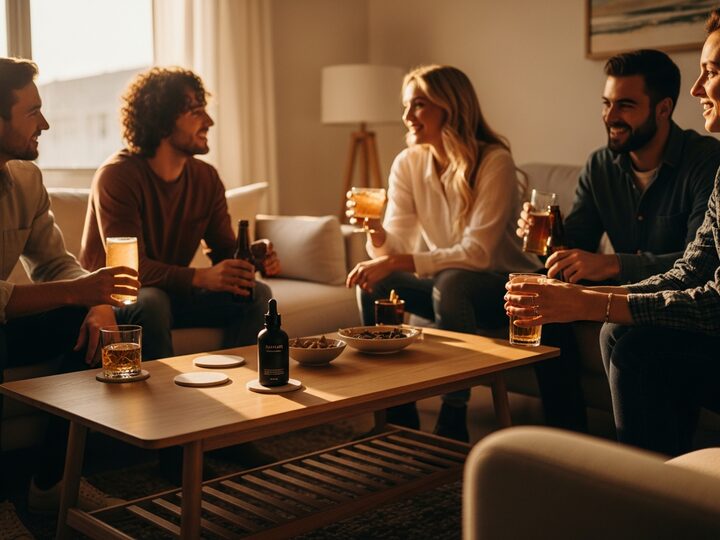
Yes. Kava can produce a noticeable change in mood and bodily sensation: some people describe an early lift, sociability or pleasant heaviness, while others mainly feel calmer. The intensity and character vary. It is psychoactive, but comparing it directly with alcohol or cannabis can create the wrong expectations. Feeling mentally clear also does not establish unimpaired coordination or judgment.
In this guide · Jump to a section
Understanding Kava’s Psychoactive Effects
What People Mean by a Kava High
Someone asking about a high may want euphoria, a change in perspective, physical relaxation or simply a drink that feels different from tea. Those are separate expectations. A brief lift followed by a quieter evening can feel satisfying to one person and underwhelming to another. The practical question is which experience you actually want.
The Role of the Kava Drinking Occasion
Kava belongs to distinct Pacific traditions and contemporary social settings. A shared bowl, conversation and a slower evening contribute to its appeal. A concentrated extract, a retail mixed drink and a traditionally prepared beverage are not interchangeable experiences. The name kava alone tells you little about a particular session’s strength or character.
Kavalactones and the Cannabis Comparison
Kavalactones interact with nervous-system targets, but laboratory findings cannot tell us exactly how a beverage will feel. For example, yangonin’s cannabinoid-receptor binding is an isolated-compound result. It does not establish a THC-like high in people, or make the effects of different kava products predictable.
Research on Kava Intoxication and Performance
These studies help separate a subjective buzz from measured effects on performance.
| Source | Evidence | Design | What it found | What to keep in mind |
|---|---|---|---|---|
| Prescott and colleagues, 1993 | SupportsClaim: Kava can produce a noticeable psychoactive effect in adults. Participants reported intoxication and showed increased body sway after kava. This directly supports a noticeable effect under the studied conditions. | Controlled beverage experiment | Intoxication ratings and body sway increased. | Not every performance measure changed. |
| Sarris and colleagues, 2013 | NeutralClaim: Kava can produce a noticeable psychoactive effect in adults. No impairment was detected on the measured simulator outcomes. That null finding neither demonstrates nor rules out a subjective psychoactive experience. | Crossover driving-simulator study; 22 adults | No impairment detected on the measured simulator outcomes. | One medicinal preparation and exposure, not every drinking session. |
| Cairney and colleagues, 2003 | SupportsClaim: Kava can produce a noticeable psychoactive effect in adults. Motor and attention impairment was observed in intoxicated kava users. This supports an effect at the selected heavy exposure, not its frequency in ordinary use. | Intoxicated users compared with controls | Residual attention and motor impairment were observed. | Selected heavy exposure; not an estimate for all consumers. |
| Ligresti and colleagues, 2012 | NeutralClaim: Kava can produce a noticeable psychoactive effect in adults. Receptor binding was tested in the laboratory, without administering kava to people. It does not demonstrate a human high or equivalence with cannabis. | Laboratory receptor experiment | Yangonin bound to a cannabinoid receptor. | No human comparison with cannabis. |
Sources accessed October 12, 2026. This is a focused review of the linked sources, not an exhaustive search of every kava study.
What the Studies Say About a Kava Buzz
Feeling Clearheaded Versus Performing Normally
The small simulator study is useful because it measured performance rather than relying only on how participants felt. Its reassuring result belongs to the particular preparation and testing conditions used. It cannot settle the effects of a longer social session, a different product or repeated servings. Conversely, the intoxication study should not be used to describe every casual drinker. Together, they show why broad statements such as “always clearheaded” or “just like being drunk” miss the variation. How an experience feels and how well someone performs are different questions.
The Kava Buzz and Its Later Effects
The account of a pleasant first phase can leave out what follows: quietness, tiredness, reduced concentration or an uncomfortable morning. That matters when judging whether the experience suited the occasion. The controlled beverage findings also remind us that an enjoyable subjective effect can coexist with a measurable physical change. A useful description of kava therefore includes the course of the evening, not simply whether there was a buzz. It also leaves room for a disappointing or unpleasant response without assuming the person needs a stronger experience.
First-Person Accounts of the Kava Buzz
The full set of accounts includes mild effects, a brief lift, varied sessions and unwanted aftereffects. These are individual experiences, not estimates of how often each response occurs.
A mild buzz that felt underwhelming
During a first session lasting about two hours, the writer drank Kavalink root powder soaked, blended and strained with water and a little cream. They felt calm with a slight head buzz but little euphoria; a later reply mentioned dizziness and headache. The writer also reported near-daily alcohol use and hoped to change that routine. First-session expectations and the later unwanted effects are part of the experience, not a reason to assume more would be better.
Read the original account →A brief lift, then a quieter phase
The commenter described roughly twenty to thirty minutes of euphoria followed by several hours of bodily comfort and calmer feelings. The most noticeable buzz was shorter than the overall experience. Their report separates early excitement from later relaxation; it does not establish a standard duration.
Read the original account →Sociability alongside poorer concentration
Another writer felt talkative and euphoric after a strong, personally described “heady” kava, then noticed difficulty concentrating, spinning and blurred vision before feeling calmer. They also associated overdoing it with worse effects. The enjoyable opening was only one part of the session.
Read the original account →The same person had both pleasant and cloudy sessions
Some sessions felt sociable and pleasant; others left this newer drinker tired and mentally cloudy. The writer connected variation to their starting condition, without testing that explanation.
Read the original account →A noticeable session after repeated disappointments
The writer had tried capsules, root preparations, bars and instant kava with little or inconsistent effect. A later evening sharing Aluball-prepared Tonga kava in coconut water with a friend produced pleasant sedation after roughly ninety minutes. They reported no hangover, but did not notice the social boost they expected. Changing products and methods, a shared batch and uncertain individual intake make the turning point hard to explain. Their reverse-tolerance explanation was speculation.
Read the original account →Clear-feeling thoughts, substantial physical effects
An Erowid writer repeatedly chewed root during an insomnia night. Delayed effects became physically impairing despite a relatively clear-feeling mind, with nausea and fatigue the following morning. This intense episode illustrates a mismatch between subjective clarity and physical functioning, rather than a typical session.
Read the original account →Other Ways to Enjoy a Relaxed Evening
Choose an occasion around the experience you want, rather than treating every altered state as equivalent.
| Approach | Evidence & role | Practical tradeoffs |
|---|---|---|
| An ordinary alcohol-free drink | Keeps the glass-in-hand ritual and flavor experience. Source | Choose this when the aim is participation without deliberately seeking a psychoactive effect. |
| A relaxation practice | Offers a way to wind down without taking a psychoactive botanical. Source | Breathing, guided imagery, and muscle relaxation involve learning a practice rather than expecting a beverage sensation. |
| Kava for an evening occasion | Combines a drink ritual with possible calming or mood effects. Source | The experience can include sleepiness or impairment; no guaranteed buzz or intensity. |
What to Expect From Kava’s Effects
Kava can feel distinctly different from an ordinary drink. The strongest fit is for someone interested in its particular combination of relaxation, bodily effects and sometimes sociability. Expecting a dependable cannabis-like high or assuming a clear mind means normal performance is less well supported.
Kava Buzz and Effects: Common Questions
Open a question for the longer answer.
Is kava psychoactive?
Yes. It can change mood, bodily sensations and behavior. “Psychoactive” describes that capacity; it does not tell you how pleasant or intense an individual experience will be.
Does kava feel like alcohol?
No. Some people find overlapping relaxation or sociability, but the subjective experience and research findings do not make kava interchangeable with alcohol.
Does kava make everyone euphoric?
No. Accounts include noticeable euphoria, mild calm, disappointment and unpleasant effects. A dramatic response is not the only possible outcome.
Can you drive if kava makes you feel clearheaded?
No. Subjective clarity is not a test of driving ability. The small controlled study cannot establish safety for every product or drinking pattern.
Why does a kava buzz change during a session?
Some accounts distinguish an early lift from later physical relaxation or tiredness. Products and circumstances differ, so there is no single reliable timeline.
What does the 7/10 evidence score mean?
This score is our editorial assessment of the evidence that kava may be useful for this specific purpose, considering its relevance, quality and consistency. It is not a measure of actual usefulness for an individual, a validated clinical scale, a success rate or your probability of benefit. Less evidence does not mean less personal benefit: some people may find kava useful even where research is limited. Personal benefit, however, does not establish effectiveness for everyone.