A research-backed review
Kava for Social Anxiety: Can It Make Conversations and Social Settings Feel Easier?
People describe feeling less guarded around others. The evidence for treating social anxiety disorder is much thinner.



Commercial disclosure: this guide is written by Nukava’s founders. Nukava sells kava. This is education, not medical advice; the research discussed does not establish that Nukava products treat these conditions.
Can kava reduce anxiety in social situations?
Some people find social occasions more comfortable with kava. That is plausible as an experience, but a dependable treatment effect for social anxiety disorder has not been established. A case report and broader anxiety trials provide leads, not a clear answer about fear of judgment or avoidance.
In this guide · Jump to a section
Kava and Social Anxiety: Comfort, Confidence and Avoidance
Social Nervousness and Persistent Avoidance
Being nervous before a party is not the same as repeatedly avoiding school, work or relationships because of fear of scrutiny. A drink may make a conversation feel easier without changing the pattern that restricts someone’s life. The important question is whether participation becomes more comfortable and flexible over time.
Kava’s Social Setting and Shared Ritual
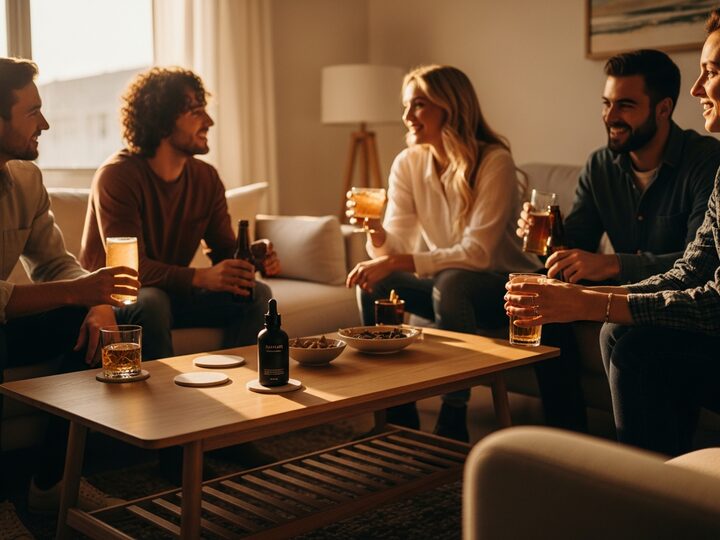
Kava’s traditional Pacific use often involves shared space and conversation. A welcoming group, slower pace and an alcohol-free occasion can influence how an interaction feels. They belong in the story rather than being credited automatically to an ingredient. Drinking alone before a stressful event is a different setting.
Physical Calm and Fear of Judgment
Kava’s broader anxiety research makes relief from nervousness a reasonable possibility. But physical relaxation, fear of judgment and social behavior can change independently. Someone may feel less tense yet remain caught in self-conscious thoughts, or become too tired to enjoy the interaction.
Research Relevant to Kava for Social Anxiety
These are clinical leads related to social anxiety, rather than a set of dedicated social-anxiety efficacy trials.
| Source | Evidence | Design | What it found | What to keep in mind |
|---|---|---|---|---|
| Anxiety and phobia case, 2001 | SupportsClaim: Kava can reduce anxiety during social situations in adults. The case described improvement with overlapping phobia diagnoses; one uncontrolled person cannot establish a reliable social-anxiety effect. | One woman with several anxiety diagnoses. | Substantial improvement was reported during follow-up. | No comparison group or social-anxiety-specific estimate. |
| Mixed-anxiety trial, 2003 | NeutralClaim: Kava can reduce anxiety during social situations in adults. The mixed-anxiety study had conflicting primary and secondary analyses and no specific social-anxiety estimate. | 141 patients; placebo-controlled multicenter trial. | Primary endpoint was negative; secondary adjusted analysis favored kava. | Mixed diagnoses and inconsistent statistical findings. |
| KADSS, 2009 | NeutralClaim: Kava can reduce anxiety during social situations in adults. Some participants had social phobia, but no separate social-anxiety efficacy outcome was established. | Brief placebo-controlled crossover in anxious adults. | General anxiety improved; some participants had social phobia. | No separate social-anxiety efficacy result. |
Sources accessed October 12, 2026. This is a focused review of the linked sources, not an exhaustive search of every kava study.
How to Read the Social-Anxiety Evidence
What the Social-Phobia Case Report Shows
The published case report matters because it includes social phobia rather than assuming all anxiety is identical. However, one person with overlapping diagnoses cannot show how often others would benefit or which symptoms changed because of kava. The absence of a blinded comparison leaves room for time, expectations and other circumstances to explain improvement.
Why General Anxiety Trials Do Not Settle Social Anxiety
The KADSS trial included people with social phobia among other diagnoses, but did not produce a separate treatment estimate for it. Similarly, the multicenter anxiety study cannot demonstrate that kava reduces fear of scrutiny or avoidance specifically. A convincing social-anxiety trial would measure those outcomes, not simply rely on a general anxiety scale.
Comfortable Participation Versus More Talking
Feeling able to join a conversation, play music or stay at a gathering may be meaningful. So are reports of continued rumination, impaired socializing or tiredness. More talking is not automatically more comfort, and a pleasant night does not demonstrate lasting change. Kava is best discussed here as a possible part of an occasion, while persistent avoidance deserves approaches designed to address it.
Personal Experiences of Social Anxiety and Kava
These reports cover live performance, weekend outings, everyday conversations and rumination after a gathering. Easier interaction sometimes came with tiredness, while other people remained anxious or found themselves too impaired to socialize comfortably. Each is an attributed personal report, not a measure of how often kava works.
Less nervous when performing live music
Inglingian described feeling less nervous playing live music. Their wider account included calmer weekends but no reliable prevention of panic. Performance comfort and panic relief were different outcomes within the same personal report.
Read the original account →Feeling an effect did not ensure attending the party
24601 skipped a party after one trial. A later mixture felt too impairing for socializing, although a spontaneous shop conversation followed. The poster questioned whether kava explained the conversation; a difficult week and recent treatment also mattered.
Read the original account →More talkative on weekend outings
Steve Mariotti reported more conversation during outings and friendliness the following day. Longstanding social fear was self-reported.
Read the original account →An easier high-stress weekend
TidyMinion reported a better stressful weekend with premade kava and valued feeling calmer the next day. Caffeine, diet and sleep also shaped their experience; prior St John’s wort use was discussed.
Read the original account →Easier interaction, but tiredness too
wormwood said social interaction was easier, but disliked becoming tired. Brief report without product or duration details.
Read the original account →Physical relaxation did not stop post-event rumination
After a child’s birthday gathering, Kava Steve felt physically relaxed but continued replaying the social conversations mentally. More kava did not resolve that restless thinking, illustrating a gap between bodily calm and social worry.
Read the original account →Less disruption without eliminating symptoms
Vekta described less social-anxiety disruption after a month of regular kava, while panic attacks and sensory overload remained. Earlier therapy and a subsequently identified learning disability complicate attribution. Black Sands Borogu was their first product.
Read the original account →Other Approaches to Social Anxiety
For persistent social fear, consider approaches that address avoidance and participation directly.
| Approach | Evidence & role | Practical tradeoffs |
|---|---|---|
| CBT with exposure-based practice | Directly addresses fear of scrutiny and avoided situations. Source | Requires practice; has a substantially more developed evidence base for social anxiety. |
| Clinician-selected medication | An option for persistent social anxiety or selected performance symptoms. Source | Different medicines have different roles, timing, and side effects. |
| Supportive, lower-pressure social occasions | Offers opportunities for participation and feedback. Source | Helpful context; not necessarily sufficient treatment for a disorder. |
What to Expect From Kava in Social Situations
Kava may make some interactions feel easier, and its social context helps explain the appeal. The evidence does not establish treatment of social anxiety disorder. Useful progress is comfortable participation and less restriction in everyday life, not simply feeling a drink or becoming more talkative.
Questions About Kava for Social Anxiety
Open a question for the longer answer.
Is there a clinical trial specifically proving social-anxiety benefit?
The studies here do not establish that result. A relevant case and mixed-anxiety samples are substantially weaker than a dedicated, well-controlled trial.
What about public speaking or performing?
Some people describe less performance nervousness. Those accounts do not establish reliable benefit or improved performance quality across situations.
Could kava make socializing harder?
Yes, accounts include tiredness, feeling too impaired to socialize and persistent rumination. The range matters even though it cannot tell us the frequency of each outcome.
Is it an alternative to exposure-based therapy?
It has not been shown to replace that work. Therapy addresses avoided situations and fear of evaluation over time; enjoying a social drink is a different aim.
What does the 5/10 evidence score mean?
This score is our editorial assessment of the evidence that kava may be useful for this specific purpose, considering its relevance, quality and consistency. It is not a measure of actual usefulness for an individual, a validated clinical scale, a success rate or your probability of benefit. Less evidence does not mean less personal benefit: some people may find kava useful even where research is limited. Personal benefit, however, does not establish effectiveness for everyone.