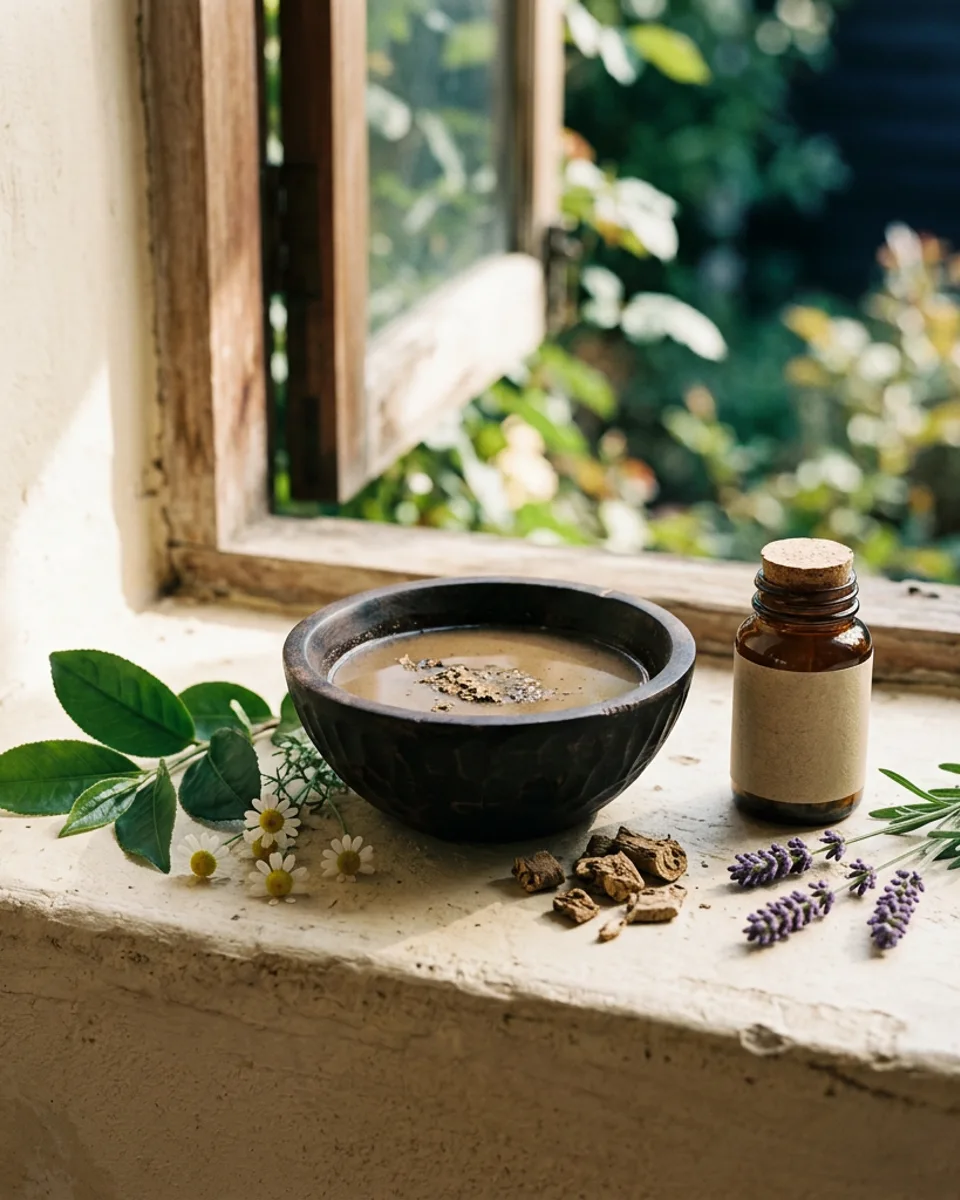



The Short Answer: Our Winner and Standout Runners-Up
Kava is our overall winner for an evening wind-down. Think about that point in the day when you’ve closed your laptop, finished dinner, and finally have some time to yourself. You want to relax and enjoy the evening. That’s where we’d choose kava.
What wins us over is the whole experience. Kava contains active compounds called kavalactones that can produce relaxation and feelings of well-being. It also gives you something to do with that moment: prepare a drink, sit down, and share it if you have company. Its long Pacific tradition of hospitality is a big part of why we find it so appealing.
For that evening drink, we prefer kava to alcohol and kava to kratom. Their dependence and other health risks make them less appealing choices for simply unwinding.
But a great evening drink isn’t necessarily what you want at your desk, or when jet lag has you wide awake at the wrong hour. These are the runners-up we’re most excited about for different situations:
- L-theanine is our daytime pick. It’s easy to fit into a working day and suits someone looking for a subtler supplement experience.
- Ashwagandha is our choice for a daily stress routine. Its short-term stress and sleep research gives it a stronger case for use over several weeks than for an immediate effect tonight.
- Standardized oral lavender oil is our botanical research standout. If anxiety-specific evidence is your priority, it deserves to be near the top of your list.
- Melatonin wins for sleep timing. Jet lag and a delayed sleep schedule are the kinds of problems its research addresses directly.
We also give magnesium a clear win when your intake is inadequate. And if all you want is a comforting cup before bed, chamomile is hard to beat for simplicity.
One important point before we go further: kava can impair you, interact with medicines, and has been linked to rare serious liver injury. The safety section explains what to check. Our enthusiasm for the experience comes with those tradeoffs.
That’s the shortlist. To make sense of the rest, it helps to understand why so many very different products end up on the same “calm” shelf.
What Are Calming Supplements?
“Calming supplement” covers a surprisingly wide range of ingredients. Kava and lemon balm are herbs. L-theanine and glycine are amino acids. Magnesium is a mineral, and melatonin is a hormone. You’ll find them in capsules, powders, teas, and drinks, often with similar promises on the front of the package.
That can make shopping confusing. You might be looking for a way to enjoy your evening, while the product you’re holding is designed around sleep timing or nutritional support. Even a useful ingredient can be the wrong purchase for the job.
So start with something specific: “I want a relaxing drink after work,” “I want a simple daytime supplement,” or “My sleep schedule is off.” Treating an anxiety disorder is a separate medical question.
We compare kava with 19 alternatives in this guide. We’ve also included the options people often weigh against supplements—such as alcohol, cannabis, and psilocybin—because those comparisons matter even though they don’t all belong in the supplement aisle.
With your goal in mind, the table below becomes much easier to use. You can skip straight to the options that fit your day.
Calming Supplements Compared at a Glance
Here’s where we land on the main supplement options. The verdict column tells you what we’d choose each one for; the next two columns show what supports that choice and what might change your mind.
| Ingredient | Our verdict | Evidence snapshot | Timing and main tradeoff | Detailed comparison |
|---|---|---|---|---|
| Kava | Overall pick for an adult evening wind-down | Human anxiety trials; mixed results | A session-drink tradition; drowsiness and liver risks matter | Kava research |
| L-Theanine | Our daytime pick | Small human stress and sleep studies | Acute and repeated-use studies; effects may be subtle | Kava vs L-Theanine |
| Magnesium | Clear choice when magnesium intake needs attention | Established nutritional role; less certain calming claims | No dependable immediate calming effect | Kava vs Magnesium |
| Ashwagandha | Our pick for a daily stress routine | Encouraging short-term findings for some preparations | Usually assessed over weeks; thyroid and liver concerns | Kava vs Ashwagandha |
| Oral Lavender Oil | Our botanical anxiety-research standout | Positive trials of a defined oral preparation | Studied over weeks; diffuser oils are not substitutes | Kava vs Lavender Oil |
| Lemon Balm | Appealing for an uncomplicated herbal tea | Small extract studies | Some acute studies; reduced alertness is possible | Kava vs Lemon Balm |
| Chamomile | Our practical choice for a comforting evening tea | Preliminary anxiety findings for extracts | Tea ritual is immediate; treatment claims need more evidence | Kava vs Chamomile |
| Passionflower | A bedtime-tea runner-up | Small sleep and anxiety studies | Preparation matters; can cause drowsiness | Kava vs Passionflower |
| Valerian | Lower on our sleep shortlist | Inconsistent sleep findings | Sedation does not guarantee better sleep | Kava vs Valerian |
| Melatonin | The sleep-timing winner | Better-established evidence for selected circadian uses | Timing is central; daytime drowsiness can occur | Kava vs Melatonin |
| Glycine | A simple, budget sleep option | Small human sleep studies | Bedtime use studied; broad calming benefit unproven | Kava vs Glycine |
| GABA | Lower on our shortlist | Limited oral-supplement evidence | A familiar brain messenger does not ensure an oral effect | Kava vs GABA |
| Saffron | A standout for mood research | Promising studies of selected preparations | Usually assessed over weeks; spice and extracts differ | Kava vs Saffron |
| Kanna | Kava wins this comparison | Early studies of specific extracts | Product and interaction evidence remain limited | Kava vs Kanna |
| Rhodiola | Skip it for winding down | Insufficient reliable evidence for broad claims | May be activating and interfere with sleep | Kava vs Rhodiola |
You don’t need to try your way through this entire table. Pick the two or three that match what you want, then take a closer look. Here’s what stands out to us about each one.
15 Calming Supplements: Benefits, Tradeoffs, and Our Verdict
We’ll start with our overall pick, then work through the daytime options, the evening teas, and the ingredients that make more sense for sleep or mood. Some are strong runners-up. A few are here because we think you can make a better choice.
Kava
Our pick for an evening wind-down.
Kava comes from Piper methysticum, a plant with deep roots in Pacific culture. The traditional drink is made by preparing its roots and rhizomes with water. It has an earthy taste, and making and sharing a bowl is part of the appeal. Today, you’ll also find instant powders, capsules, extracts, and prepared drinks.
What we like is that kava gives an evening a focal point. You make your drink, settle in, and have something to share. The relaxing effects matter, of course, but so does having a ritual you enjoy coming back to.
The clinical anxiety research is mixed. A smaller trial reported benefit, while a larger 16-week trial found no advantage over placebo for generalized anxiety disorder. We’re stronger on kava as our preferred evening experience than as a treatment for that condition.
If you’re thinking about replacing an alcoholic drink, kava vs alcohol is the most useful place to start. You can also explore the kava research for the studies behind the claims.
L-Theanine
Our daytime runner-up.
Of course, plenty of people want something that fits between meetings rather than around an evening gathering. That’s why L-theanine is so high on our list.
It’s an amino acid found in tea, usually sold as a capsule or powder. Its appeal is a subtler supplement experience in a straightforward format. Human research includes small studies of stress, sleep, and attention, including a four-week trial in healthy adults.
For a simple daytime option, this is where we’d start. Check the full label, though: theanine products marketed for focus sometimes add caffeine. That extra ingredient changes the purchase.
The practical choice between a daytime capsule and an evening drink is at the heart of our kava vs L-theanine comparison.
Magnesium
The clear winner when your magnesium intake is low.
Magnesium brings us back to a basic question: are you getting enough of an essential nutrient? It has important jobs in nerve, muscle, and enzyme function. Addressing inadequate intake matters even if you never feel a distinct calming effect. Kava can’t do that job.
The different forms can make the shelf look more complicated than it needs to be. Glycinate, citrate, and L-threonate all supply magnesium in different compounds. Compare the elemental magnesium amount, how well you tolerate the product, and its cost.
We wouldn’t pay extra just for a promise of instant calm. Anxiety and sleep findings are mixed, and a supplement has a much clearer purpose when it addresses an actual nutritional need.
Our kava vs magnesium guide walks through the forms and explains why the two can have separate roles in the same routine.
Ashwagandha
Our choice for a daily stress routine.
If you’re thinking beyond tonight and looking at how you feel over the next few weeks, ashwagandha becomes more interesting. Some preparations have encouraging short-term stress and sleep findings. That’s the reason we give it a prominent runner-up spot.
You’d judge this kind of product by whether the routine is helping over time. Expecting one capsule to feel like an evening drink misses its main appeal. Kava wins our evening experience; ashwagandha has the stronger fit here for a daily stress routine.
Before using it, check thyroid conditions, medicines, pregnancy, and liver concerns. Ashwagandha has liver-injury reports, too.
If you’re deciding which kind of routine you actually want, kava vs ashwagandha goes into that choice in more detail.
Oral Lavender Oil
Our botanical research standout for anxiety.
Lavender is easy to underestimate. You might picture a scented pillow or a bath product. But a defined oral preparation called Silexan has a serious clinical research program behind it.
One randomized trial involving 539 adults studied it over ten weeks and reported improvements compared with placebo. The research is tied to that preparation and includes manufacturer involvement. Even with those limits, we give oral lavender the anxiety-research edge over kava.
That’s a meaningful reason to put it on your shortlist. Just be clear about what you’re buying: an oral product formulated for swallowing. An ordinary bottle of diffuser oil is not a substitute.
We explain the distinction between oral supplements and aromatherapy in kava vs lavender oil.
Lemon Balm
A lovely option for a simple evening tea.
You may not want a capsule routine at all. Sometimes the appealing part is putting the kettle on and having a warm drink while the day winds down. Lemon balm fits that moment well.
It’s Melissa officinalis, a mint-family herb used in teas and extracts. A small laboratory study found increased calmness and reduced alertness with a tested extract. A cup of tea is a different preparation, with a less defined effect.
We like lemon balm for the evening it makes easy: boil the water, steep the leaves, sit down. Kava is still our choice for a shared relaxation drink, but lemon balm earns its place as an uncomplicated kitchen ritual.
If you’re weighing tea against an extract—or wondering about using it alongside kava—our kava vs lemon balm guide covers both.
Chamomile
Our go-to evening tea.
Chamomile has a lot going for it before you get anywhere near a supplement claim. It’s familiar, easy to find, and easy to prepare. For someone who wants a comforting cup at the end of the day, that’s a good starting point.
German chamomile extracts also have preliminary anxiety findings, although an ordinary tea bag is not an established anxiety or insomnia treatment. We choose it primarily because it makes a pleasant evening habit so easy.
If that cup already does what you want from the ritual, there’s no need to turn it into a more elaborate routine. Relevant plant allergies and medicines, including warfarin, still need checking.
The difference between enjoying a tea and choosing a more distinct kava experience is what we explore in kava vs chamomile.
Passionflower
A worthwhile runner-up for bedtime tea.
Passionflower is another herb you’ll see in evening teas, extracts, and sleep blends. Usually it’s Passiflora incarnata. Small studies suggest possible sleep or anxiety benefits, but the evidence is limited.
We like the simple tea format for someone who wants to build a bedtime ritual. Kava remains our choice for relaxing with company and has a more developed anxiety-trial history.
Pay attention to what else is in a passionflower blend. It can cause drowsiness, and combinations with other sedating products or anesthesia need review.
Our kava vs passionflower comparison looks at that bedtime role and the questions around combining the two.
Valerian
A bedtime herb, but not one of our top picks.
Valerian is a name you’ve probably seen on a sleep product. Its reputation is strong; its clinical results are less consistent. That gap is why it sits lower on our shortlist.
It can also cause unwanted effects such as digestive upset or mental dullness. Feeling sleepy is only part of what you want from a good night: how you sleep and how you feel afterward matter, too.
For a social evening, we choose kava easily. For persistent insomnia, we’d put getting a useful treatment plan ahead of cycling through more sleep herbs.
There’s also a small study of kava and valerian used separately and together. We cover what it does—and doesn’t—tell us in kava vs valerian.
Melatonin
The winner for jet lag and delayed sleep timing.
Here’s a situation where we’d choose something else over kava without hesitation: your sleep schedule is off. Maybe you’ve crossed time zones, or your body wants to fall asleep much later than your morning allows.
Melatonin helps regulate sleep-wake timing, and its research addresses those problems directly. That makes it a much better match for the job.
Timing is central. Judge it against the schedule you’re trying to achieve, and treat unwanted daytime drowsiness as a downside rather than proof that it’s working well. An effective melatonin plan has no reason to give way to our preference for a kava drink.
We get into the difference between relaxing and shifting the sleep clock in kava vs melatonin.
Glycine
A simple, inexpensive sleep option with early evidence.
Glycine is an amino acid found in food and made in the body. Small bedtime studies give it a promising sleep signal, though it isn’t an established insomnia treatment.
What we like is the straightforward format. A clearly measured, single-ingredient powder is easy to understand, and it scores well in our price comparison. It’s an option to assess against a specific sleep goal rather than a noticeable social-drink experience.
The similar names can cause confusion: glycine is different from GABA, and magnesium glycinate is not interchangeable with a measured serving of free-form glycine.
Our kava vs glycine comparison explains those differences and when a complementary routine could make sense.
GABA
Kava has the stronger case.
GABA has an appealing story: it’s an important inhibitory messenger in the nervous system, so taking more sounds like a straightforward way to feel calmer. The missing step is showing what taking it by mouth actually does.
There are small oral-supplement studies of sleep and stress, but the human evidence remains limited. We find that less persuasive than kava’s more developed anxiety research and the drink experience we enjoy.
It’s also worth reading the name carefully. A GABA supplement is different from gabapentin or phenibut.
If the brain-messenger explanation is what caught your attention, kava vs GABA takes a closer look at the evidence behind it.
Saffron
A standout for mood research.
Saffron earns its place for a different reason again: research into mood-related outcomes. Selected extracts have been studied for mood, stress, and related symptoms, including an eight-week trial in adults with subclinical symptoms.
For that research question, we give saffron the edge over kava. It’s a supplement to assess over time, rather than something we’d choose for the experience of tonight’s drink.
The product matters. Culinary threads, whole-stigma powder, and standardized extracts are different preparations. The fact that saffron is an expensive spice tells you little about whether a particular capsule matches a study.
We unpack the preparation and timing differences in kava vs saffron.
Kanna
Kava wins; kanna’s evidence needs to catch up.
Kanna, Sceletium tortuosum, is a South African botanical. The human research includes small tolerability and cognition studies of selected extracts. For example, a three-month study in 37 healthy adults assessed safety rather than treatment effectiveness.
That’s a starting point, but it isn’t enough for kanna to lead our relaxation shortlist. We’d put kava ahead of it on both the experience we want and the depth of anxiety research.
Check antidepressants and other medicines before use. Laboratory findings show serotonin-related activity, while direct interaction data remain limited.
Our kava vs kanna guide explains why the current evidence leads us to that choice.
Rhodiola
Skip it for winding down.
Rhodiola is often discussed in terms of stress-related fatigue and resilience. It’s easy to hear “stress” and assume you’re looking at another calming herb. But rhodiola can feel activating, and insomnia is a reported side effect.
That’s a poor fit for the evening we’re trying to create. NCCIH also finds insufficient reliable evidence to establish benefit for a health purpose.
If fatigue is what’s bothering you, it deserves attention on its own terms. Adding something calming to counter an unwanted activating effect is a good reason to step back and simplify.
We explain that distinction in kava vs rhodiola.
Notice how much the timeline changed as we moved through the list. A drink you choose for this evening, a supplement studied over weeks, and a product for your sleep clock need different expectations. That’s the next thing to get clear before you buy.
How Quickly Do Calming Supplements Work?
It’s a fair question: if you try something, when should you expect to notice it? The answer is easier to follow when you separate three kinds of use.
Something for tonight. Kava is our choice for sitting down with a relaxation drink. L-theanine and lemon balm also have studies of effects after a single dose. What we don’t have is a dependable minute-by-minute schedule that applies to every product and person.
Something you assess over weeks. Oral lavender, ashwagandha, and saffron fit this pattern. The lavender trial mentioned above lasted ten weeks. Many kava anxiety trials also assess repeated use over weeks, which is a different question from how an evening drink feels.
Something with a specific job. Melatonin needs the right timing for your sleep schedule. Magnesium needs a nutritional or medical reason for use. Waiting for a strong sensation is a poor way to judge either one.
Knowing which category you’re in saves a lot of second-guessing. Follow the product or clinician’s instructions, and decide what improvement you’re actually looking for. If you don’t notice anything, revisit that goal before adding servings.
It also helps with another common decision: whether to add a second ingredient. Once you know what each one is supposed to do, combinations become much easier to think through.
Can You Combine Calming Supplements?
Yes—some combinations have a sensible place in a routine. If magnesium addresses a nutritional need and you also enjoy an occasional kava drink, those two choices can have separate purposes. A well-labeled formula can also be more convenient than several bottles.
What we want to see is a reason for each ingredient. Before buying a blend, you should be able to explain why you want the second ingredient as well as the first.
Combinations With a Clear Rationale
Kava and magnesium is the easiest example to understand. One addresses a nutritional need; the other serves an occasional relaxation purpose. Kidney health, total magnesium intake, and interacting medicines still need checking. There’s no established reason to add magnesium simply to intensify kava.
Kava and L-theanine is another pairing we find plausible for an adult relaxation formula. Theanine’s subtler supplement role is the reason to consider it alongside kava. That’s a rationale for the pairing, rather than proof that the two produce a better result together.
Kava with glycine or saffron can also mean different goals within the same routine: a sleep-focused or mood-focused supplement alongside an occasional evening drink. That could be useful, provided the full routine fits your health and medicines.
Controlled human evidence hasn’t established that these pairs work better together. The magnesium, L-theanine, glycine, and saffron comparisons explain what supports each idea and what remains unknown.
Combinations That Need Closer Review
Bedtime blends need more care. Melatonin, valerian, passionflower, lemon balm, and chamomile can add sleepiness. Oral lavender also has potential sedative-interaction concerns. NCCIH advises avoiding kava with other sedating substances, so get clinical advice before putting together a combined nighttime formula.
There is some direct research worth acknowledging. A small 2001 pilot used kava, then valerian, then both. Nineteen participants reached the combination phase, with improvement in insomnia measures. That’s an interesting finding, but the sequential, unblinded design can’t establish synergy or long-term safety. We explain the study in kava vs valerian.
Ashwagandha and CBD bring additional liver and medicine-interaction questions. Kanna needs particular attention alongside psychiatric medicines. Take the whole ingredient list to the person reviewing the combination; the name on the front of the bottle won’t tell the full story.
Pairings We Advise Against for Routine Relaxation
Keep kava separate from alcohol and kratom. We also advise against using it to modify a THC or psychedelic experience. A short manufacturer-sponsored kava–kratom study doesn’t settle the combination’s long-term dependence or safety questions.
No universal combined dose or waiting interval has been established. Know each ingredient, count anything you’re already taking, and check medicines before adding another product.
Whether you settle on one ingredient or a blend, the next decision is the actual product. This is where a little time with the label pays off.
How to Choose a Calming Supplement
Two bottles can put the same ingredient in large letters on the front and still be very different purchases. Here’s what we’d look at before choosing one.
First, put your goal into a sentence. “I want a relaxing drink after work” is useful. So is “I need help with a delayed sleep schedule.” A clear goal makes it easier to spot a product that doesn’t fit, however appealing the packaging looks.
Then check what’s actually inside. An oral-lavender study concerns an oral preparation. A chamomile-extract study doesn’t automatically tell you what to expect from tea. For kava, look at the plant part, preparation, kavalactone information, and the other ingredients.
Read the full serving. A serving may be more than one capsule. For magnesium, find the elemental magnesium amount. With blends, we prefer labels that tell you the amount of each active ingredient rather than just the total weight of a proprietary mix.
Look for useful testing. Independent testing can help check identity, amounts, and contaminants. That’s valuable. It doesn’t prove the product works or that the formula suits you, and supplements aren’t FDA-approved for safety and effectiveness before sale.
Finally, work out what the routine costs. Divide the package price by full servings and consider how often you’ll use it. The cheapest capsule isn’t good value if it doesn’t serve your goal. An expensive blend doesn’t earn its price just by having more ingredients.
That gives you a much better picture of the product. There’s one more piece of the decision, though: how it fits with your health and anything else you take.
Are Calming Supplements Safe?
The useful question is whether this product makes sense for you, at the amount and frequency you plan to use it. A familiar herb name doesn’t answer that on its own.
For kava, drowsiness and reduced coordination can make driving unsafe. Heavy or prolonged use also raises concerns, including skin changes. Rare serious liver injury has been reported, and long-term clinical safety data remain limited. Its traditional use matters, but it doesn’t settle every question about today’s products.
There are a few situations where we’d put a health check ahead of a purchase:
- You take regular medicines. Ask a pharmacist or clinician to look at the actual ingredients, especially alongside sleep medicines, psychiatric medicines, blood thinners, or blood-pressure treatment.
- You have a liver or kidney condition. Kava and ashwagandha have liver-injury reports. Kidney impairment increases the risks of excess supplemental magnesium. Those details can change the choice.
- You’re pregnant, breastfeeding, or preparing for surgery. Check supplement use with the clinician responsible for your care instead of assuming an adult wellness product is suitable.
- The problem is interfering with your life. Ongoing anxiety, insomnia, or fatigue deserves an assessment. Finding a stronger-feeling product may leave the underlying problem untouched.
You don’t have to work out every interaction yourself. Taking the bottle or a clear ingredient list to a pharmacist is a practical place to start.
Those same questions become even more important with the substances people often consider alongside supplements. Let’s look at those comparisons, too.
What About CBD, Cannabis, Kratom, Psilocybin, and Alcohol?
If your real question is “What do I want to use to relax?”, you’ll probably think beyond the supplement aisle. These five options come up often, and leaving them out would miss some of the comparisons people actually make.
They don’t all belong in the dietary-supplement category, and their effects and risks differ substantially. Here’s where we land.
CBD
Kava wins for the social experience.
CBD has real medical evidence, but its strongest established use concerns a prescription product for particular seizure disorders. That doesn’t tell you that a retail CBD gummy will help with everyday anxiety.
For the evening experience we’re looking for, we choose kava. CBD also brings liver and medicine-interaction concerns, especially when it’s added to a larger supplement routine.
The difference between prescription evidence and retail claims is central to kava vs CBD.
Cannabis
We choose kava when we want to unwind without a THC high.
Some people enjoy the experience of cannabis. For us, the changes in perception and attention are more than we want from an ordinary relaxation drink. THC can also provoke anxiety or panic, which is a significant downside for this particular goal.
Cannabis and cannabinoid medicines have substantial research for other medical uses. Those uses deserve their own assessment. Our choice here is about the evening we want to have.
We compare the experiences, impairment, and evidence in kava vs cannabis.
Kratom
Kava wins this comparison decisively.
Kratom introduces opioid-active compounds and established dependence and withdrawal concerns. If the aim is simply to enjoy a relaxing evening, that’s a tradeoff we don’t find appealing.
It’s also important to know what the product contains. Natural leaf, extracts, and concentrated 7-hydroxymitragynine products are different exposures. The word “kratom” alone doesn’t tell you enough.
Our kava vs kratom guide explains why we favor kava for this purpose and why a drink containing both deserves a separate assessment.
Psilocybin
We choose kava for an ordinary evening wind-down.
Psilocybin’s depression research is worth taking seriously. A randomized trial in 104 participants is one example of promising findings. Participants were screened and received psychological support, which is central to understanding the results.
That’s a very different setting from choosing something to relax with after work. The research doesn’t turn unsupervised use or retail mushroom products into ordinary calming supplements.
If you’re curious about why we give the research credit but still choose kava for this occasion, kava vs psilocybin explains the distinction.
Alcohol
Kava is the evening drink we prefer.
Alcohol is probably the most familiar version of the after-work drink. It can feel relaxing, but its dependence potential and established health harms make it a poor choice for managing stress. Research links alcohol to liver disease, several cancers, and other health problems.
Avoiding ethanol is a substantial reason we prefer kava. We still want the drink, the pause, and the social occasion, while taking kava’s own risks seriously.
If this is the comparison that brought you here, start with kava vs alcohol. One important distinction: kava is not an alcohol-withdrawal treatment. Someone who may be dependent needs medical advice before stopping or sharply reducing alcohol.
At this point, you should have a much shorter list than the one you started with. A few questions still tend to come up regardless of which option catches your attention.
Frequently Asked Questions
Which calming supplement is best for most people?
Our overall pick is kava for an evening wind-down. If you’re looking for a daytime supplement, we’d start with L-theanine. Melatonin wins for jet lag or a delayed sleep schedule, and magnesium wins when intake is inadequate. Start with what you want to change about your day, then check whether that option fits your health and medicines.
Which option has the strongest research?
For anxiety-specific botanical research, oral lavender is our standout. Melatonin has the clearer role for sleep timing, and magnesium has an established nutritional purpose. Kava’s anxiety-trial results are mixed; its overall win here also reflects the experience and ritual we prefer.
Can you take calming supplements every day?
Some are studied or prescribed for daily use. The important thing is to follow the ingredient’s purpose and the relevant instructions, rather than turning every product into an indefinite daily habit. A short trial doesn’t establish long-term safety. Keep checking whether the routine is actually helping.
Can calming supplements become habit-forming?
Yes, depending on the substance. Kratom, alcohol, and THC-containing cannabis have established dependence concerns. Withdrawal after heavy kava use has also been reported, so we wouldn’t make an absolute “nonaddictive” promise for kava. The ingredient and pattern of use matter more than a reassuring label.
Are natural calming supplements automatically safer?
No. A natural origin doesn’t tell you the right amount or rule out an interaction. A concentrated extract can also be a very different product from the food or tea you recognize. We’d put more weight on the actual preparation and human evidence than on the word “natural.”
Can calming supplements replace anxiety medication?
Don’t change prescribed treatment based on this guide. Our overall pick concerns a relaxation experience. If you’re managing anxiety or insomnia with a clinician, bring any proposed supplement into that conversation so it can be assessed alongside the plan you already have.
How We Evaluated the Evidence
We looked at both the research and the experience of using these products: what the ingredient is being chosen for, how it’s prepared, how convenient it is, what it costs, and what risks come with it.
Controlled human studies carry more weight with us than testimonials or an explanation of how an ingredient might work. We include positive and negative findings, and we distinguish results for a particular extract from claims about an entire plant.
These are editorial rankings, rather than the results of a trial comparing everything on the list. Kava wins the evening experience we prefer. Other ingredients earn clear wins for specific uses and research questions. We also separate a sensible reason for combining ingredients from evidence that the combination works better.
For the full study references and category-by-category reasoning, follow the Kava vs links throughout the guide or visit our kava research library. These are a few of the key sources behind the overview:
- NCCIH: Kava—usefulness and safety
- Clinical trial of standardized oral lavender oil
- NCCIH: Melatonin—what you need to know
- NIH: Magnesium fact sheet
- NIH: What to know about dietary supplements
- NIAAA: Alcohol’s effects on the body