A research-backed review
Kava for Creativity: Can It Quiet Self-Criticism and Help Ideas Flow?
Enjoyment and reduced self-criticism can matter, but inspiration does not guarantee finished work.



Commercial disclosure: this guide is written by Nukava’s founders. Nukava sells kava. This is education, not medical advice; the research discussed does not establish that Nukava products treat these conditions.
Can Kava Help You Develop Creative Ideas?
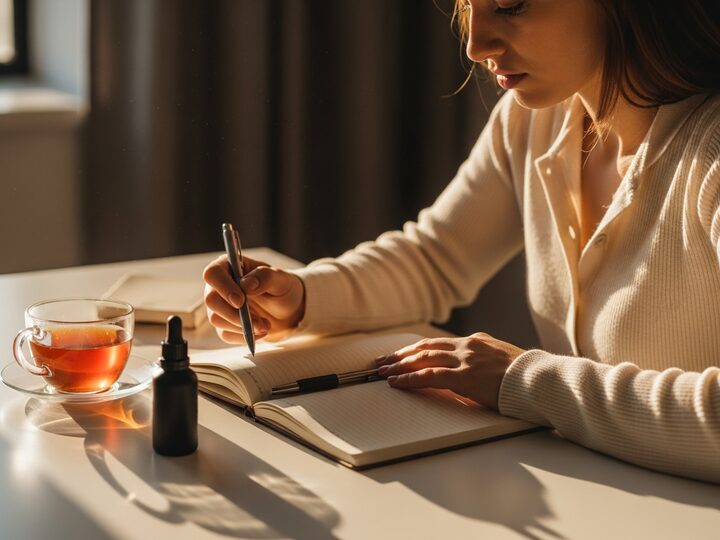
Some people find music, drawing or writing more enjoyable with kava, or feel less inclined to dismiss an idea immediately. Others describe inspiration arriving alongside too much tiredness to act. There is no established evidence that kava reliably improves creative ability or output. Its plausible role is changing the experience of a creative occasion, rather than supplying talent or guaranteeing better work.
In this guide · Jump to a section
What Creativity With Kava Would Involve
Inspiration, Evaluation and Finished Work
Generating possibilities, developing an idea, evaluating it and finishing something are different parts of creative work. A relaxed state might make one stage feel easier while making another harder. Someone enjoying music more intensely is also describing a different outcome from someone composing a piece that works better. These distinctions help keep the question useful.
Creative Activity in Kava Communities
Creative expression does not happen only at a desk or in a studio. Qualitative work on faikava describes cultural and creative learning within a shared practice. That helps explain an occasion’s value without claiming the drink alone creates the learning. Participation, relationships and the activity itself belong in the picture.
Self-Criticism and Possible Kava Effects
Some users explain their experience as less self-criticism rather than a new ability. That is a reasonable description of what they felt, but it has not been established as a reliable kava effect. Animal research on dopamine responses cannot demonstrate that a human beverage session improves ideas, originality or artistic judgment.
Research Relevant to Kava and Creativity
The closest studies examine cognition or cultural participation. Neither is a direct test of creative output.
| Source | Evidence | Design | What it found | What to keep in mind |
|---|---|---|---|---|
| Thompson and colleagues, 2004 | NeutralClaim: Kava can help adults develop ideas or carry out creative work. Cognitive and mood improvements do not directly demonstrate better idea development or creative output. | Controlled experiment; 20 volunteers | Some cognitive and mood outcomes improved. | Creative ability and finished work were not tested. |
| Gendle and colleagues, 2011 | NeutralClaim: Kava can help adults develop ideas or carry out creative work. The acute problem-solving trial detected no advantage and did not measure creative output. This is not a universal refutation of a creative effect. | Randomized problem-solving study; 54 adults | No performance advantage was found. | Problem solving is related to, but not identical with, creativity. |
| Fehoko: faikava and cultural identity | NeutralClaim: Kava can help adults develop ideas or carry out creative work. The thesis describes valued cultural and creative learning in a shared practice. It does not isolate an effect of kava on developing ideas or carrying out creative work. | Qualitative study with 12 men | Participants valued creative and cultural learning. | The shared practice cannot isolate a pharmacological benefit. |
Sources accessed October 12, 2026. This is a focused review of the linked sources, not an exhaustive search of every kava study.
What the Evidence Says About Creative Work
Cognitive Findings Versus Creative Ability
The small cognition study is sometimes tempting to read as evidence of a broad mental enhancement. It does not answer whether a musician writes a better song or an illustrator develops a more original image. The problem-solving result also keeps the interpretation grounded. Neither a favorable mood nor a particular test result gives permission to assume better creativity. Personal descriptions of reduced self-criticism are valuable because they identify a possible experience worth studying. They should remain descriptions of that experience, rather than being promoted into a proven mechanism or a dependable outcome.
Judging the Whole Creative Session
Consider whether an idea survives beyond the moment: was it captured, developed, edited or completed? A beverage could make a session enjoyable without improving the final work, and that enjoyment may still be worthwhile. The faikava research offers another perspective by placing creative activity within relationships and cultural learning. This differs from using a substance as an individual performance tool. For someone seeking an alternative, experiments on walking and idea generation address a more directly tested activity, although their results also do not apply to every kind of creative task. The aim should match the evidence.
Personal Experiences Creating With Kava
Musicians, artists and other writers describe enjoyment, less self-criticism, inspiration and difficulty acting on ideas. Brief reports remain brief; more detailed experiences include the tradeoffs.
Inspired, but too sedated to act
A musician felt moved to reconnect studio equipment after a difficult creative period, but was already too sedated after BKH Nangol to do it. Further use brought some inspiration back alongside lethargy. Pandemic stress, relationship and financial pressures were also present. The account never equates inspiration with completed work.
Read the original account →Less self-criticism, inconsistently
A commenter had been drawing more since beginning daily kava and sometimes felt less inhibited while drawing or making music. They described this as reduced self-criticism, not newly acquired talent. They explicitly said the effect was inconsistent, which limits any expectation of a repeatable creative advantage.
Read the original account →Continuing an idea instead of dismissing it
The writer felt less likely to abandon a musical idea immediately. A personal explanation of the writing process, not a measured mechanism.
Read the original account →Songwriting felt easier
A music producer described enjoying kava while writing songs. No finished-work comparison was reported.
Read the original account →Lyrics and musical enjoyment
This commenter associated a self-described heavy kava with lyric writing and musical creativity. The product and preparation were not supplied. This is a brief subjective creative experience, without a comparison of finished work.
Read the original account →Motivated to create, until the session became sedating
This writer liked morning and evening kava sessions and often felt more creative and happy to work. A recent Fiji Vanua Kelai purchase instead became too sedating after the second serving, leaving them wanting to relax and talk. The writer described morning and evening sessions lasting about two hours each. This within-person contrast includes no measurement of creative output, and the Kelai preparation was not fully specified.
Read the original account →An enjoyable afternoon of making things
KavaKitty described choosing colors and preparing a meal as unusually intuitive after a micronized-kava session. These were activities they enjoyed, rather than a formal test of originality. They already loved cooking, and the product came from a giveaway. The report supports enjoyment more clearly than improved ability.
Read the original account →Other Ways to Support a Creative Session
Choose an approach around the stage of the process that feels difficult.
| Approach | Evidence & role | Practical tradeoffs |
|---|---|---|
| Take a walk before generating ideas | A change of activity with direct experimental research on idea generation. Source | Findings depend on the task; walking does not improve every creative skill. |
| Practice a brief relaxation technique | Make room to begin when tension dominates the session. Source | Relaxation is the target, not a proven increase in originality. |
| Create with a community | Make conversation, participation and shared learning part of the occasion. Source | The group and activity matter; cultural practices are not interchangeable. |
Where Kava May Fit the Creative Process
Kava can be part of an enjoyable creative occasion for some people. The stronger claim—that it reliably improves creativity—remains unsupported. Reduced self-criticism may feel useful, but the ability to develop and finish an idea is an equally important part of deciding whether the experience served the work.
Kava for Creativity: Common Questions
Open a question for the longer answer.
Does kava increase creative talent?
There is no evidence for that claim. Some accounts describe a change in confidence, enjoyment or willingness to explore existing skills.
Can kava help with creative self-criticism?
Some writers report that experience, but it is inconsistent and not established in direct creativity trials.
Why distinguish kava inspiration from finished work?
An idea can feel exciting while tiredness prevents recording or developing it. The overall result matters more than the strongest momentary feeling.
Do cognitive studies establish a creativity benefit?
Only indirectly. Attention, recognition and problem-solving tests do not measure every part of making original or useful work.
Is enjoying art or music with kava still a benefit?
It can be a personally meaningful benefit. It should be described as enjoyment rather than assumed improvement in the quality of the output.
What does the 4/10 evidence score mean?
This score is our editorial assessment of the evidence that kava may be useful for this specific purpose, considering its relevance, quality and consistency. It is not a measure of actual usefulness for an individual, a validated clinical scale, a success rate or your probability of benefit. Less evidence does not mean less personal benefit: some people may find kava useful even where research is limited. Personal benefit, however, does not establish effectiveness for everyone.