Fermented mixer
Zero-Proof Kava Beer
A chilled 0.0% lager serving with a malty, lightly bitter profile.
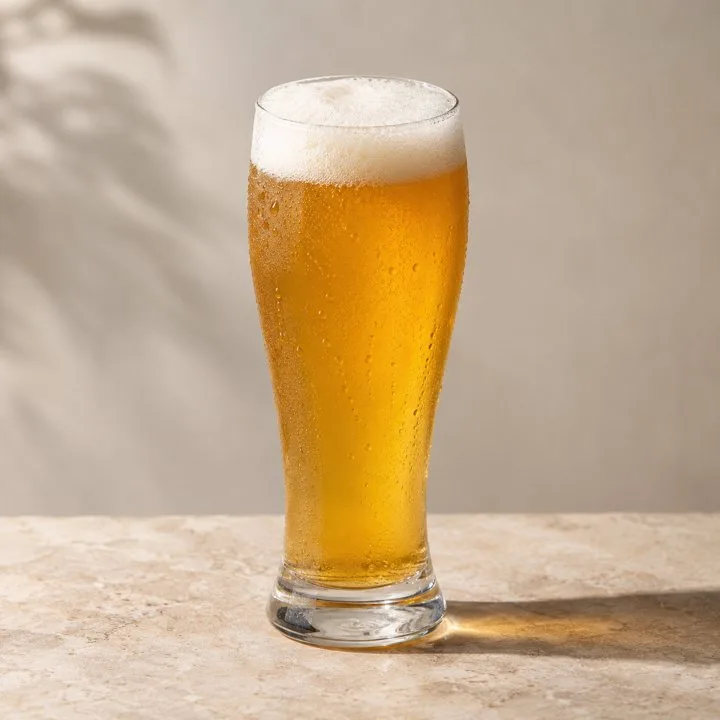
Yield: 1 drink · Serving glass — 12 fl oz (350 mL)
Sweetness: Bitter-leaning · Temperature: Chilled
nut-freedairy-freesoy-freealcohol-freesparkling
Jump to ingredientsIngredients
US measures are rounded; metric amounts retain the base recipe. fl oz measures liquid volume; oz measures weight. Nukava stays in mL. Small weights stay in grams for precision.
- 2 mL — Nukava — base amount; see strength adjustment
- 8 1/2 fl oz (250 mL) — Lager (0.0% alcohol) — chilled
Specialized equipmentEveryday kitchen tools
- Measuring jug
- Use US fl oz and mL markings; use measuring spoons for small portions.
- Mixing spoon
- Stirring, spooning and gently combining carbonated drinks.
- Serving glass
- 12oz capacity
- Nukava dropper
- Use the supplied dropper and its mL markings to measure Nukava.
Make the drink
- Measure the ingredients for one drink.
- Pour 1 fl oz (30 mL) of the measured 0.0% lager into one 12 fl oz (350 mL) glass and gently stir in Nukava.
- Slowly add the remaining 7 1/2 fl oz (220 mL) lager down the side of the glass.
- Serve without ice.
Tips
- Chill carbonated mixers first and add them last. Stir gently; do not shake or blend after adding them.
Adjustments & substitutions
Follow your product’s serving instructions. Do not combine kava with alcohol.
- For a stronger drink, increase Nukava to your preferred strength, up to 10 mL total per drink for the maximum-strength version. Mix well; the mixer amounts can stay the same.
- For a lighter texture, add 1 tbsp (15 mL) water at the same serving temperature.
Recipe origin
Inspired by Aumakua Kava Lounge.
Completed 2026-11-11: single-serving Nukava base formula. Missing quantities, ingredient choices and preparation details are editorial decisions. Use a lager explicitly labeled 0.0% alcohol rather than an unspecified zero-proof house beer base. Original source details are retained separately; this is an untested formulation, not a verified reproduction or potency-equivalence claim. The source published components rather than measured ratios; the working ratios are newly developed.
Updated 2026-11-11